Guide · checked 25 October 2026
Is Tide safe? How your money is protected
Tide isn't a bank, which surprises many people. But for most Tide business accounts, your money is held with ClearBank, a UK bank, so eligible deposits are protected by the FSCS up to £120,000. Here's how it works, the exceptions, and how to check which applies to you.
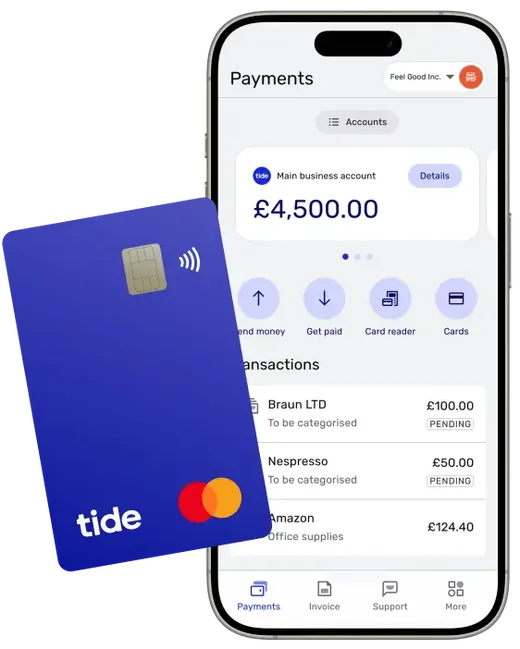
Short answer: Tide Platform Ltd is authorised by the FCA as an e-money institution. Tide's current and savings accounts are "powered by" ClearBank Ltd, a bank authorised by the PRA, so eligible deposits are FSCS-protected up to £120,000 per depositor across all ClearBank accounts. Some older Tide accounts are e-money accounts with PrePay Technologies Ltd, where money is safeguarded instead.
Is Tide a bank?
No. Tide says on its own website that "Tide is not a bank". Tide Platform Ltd designs and runs the Tide app and website, and is authorised by the Financial Conduct Authority under the Electronic Money Regulations 2011 to issue e-money and provide payment services.
That doesn't make Tide less safe in itself. Many business accounts work this way: a technology company runs the app and customer service, and a licensed bank holds the money. What matters is where your money is held, because that decides how it's protected.
FSCS protection through ClearBank
Tide says its current and savings accounts are powered by ClearBank Ltd. ClearBank is a UK bank authorised by the Prudential Regulation Authority and regulated by the FCA and PRA. Because your money is held with a bank, eligible deposits are protected by the Financial Services Compensation Scheme (FSCS).
- What's covered: eligible deposits, if ClearBank were to fail.
- How much: up to £120,000 per eligible depositor.
- Across what: all accounts you hold with ClearBank, including through other brands that use ClearBank.
The Tide Instant Saver is also provided through ClearBank, so eligible savings are covered in the same way. That matters if you're using the Instant Saver for the £125 part of the Tide promo code offer*. *T&Cs apply
Older e-money accounts and safeguarding
Tide says some accounts, identified by the sort code 23-69-72, are e-money accounts powered by PrePay Technologies Ltd, an FCA-authorised electronic money institution. Money in these accounts isn't covered by the FSCS. Instead, it's safeguarded: the e-money institution must keep an amount equal to customers' money separate from its own, to protect it if the firm becomes insolvent.
Safeguarding and FSCS protection both aim to protect your money, but they work differently. FSCS is a compensation scheme with a set limit. Safeguarding depends on the firm holding customers' money correctly, and getting money back after a failure can take longer. Our guide to bank accounts versus e-money accounts explains the difference in more detail.
How to check which applies to you
- Look at your sort code in the Tide app. Tide says e-money accounts use sort code 23-69-72.
- Read your account terms in the app, which name the provider of your account.
- Ask Tide support if you're not sure.
- Check the FCA register. You can look up Tide, ClearBank and PrePay Technologies on the FCA Financial Services Register.
The £120,000 limit: what it means for your business
The FSCS limit is per depositor, per banking licence. If your business holds money with ClearBank through Tide and through another brand that also uses ClearBank, the £120,000 limit applies to the total, not to each account.
Most small businesses hold well under this amount. If yours doesn't, consider spreading money across providers with different banking licences, and check the FSCS's own guidance on what's protected.
Day-to-day security
FSCS protection covers the failure of a bank. It doesn't protect you from fraud or scams. Whatever account you use:
- never share one-time passcodes, your PIN or your login details, even with someone claiming to be from Tide
- check payee details carefully before you send money
- use the Tide app's own support chat rather than phone numbers from emails or texts
- contact Tide straight away if you spot a payment you don't recognise
Tide lists a fraud helpline among the features of every plan, including Free.
If something goes wrong
If you have a problem with your account, raise a complaint with Tide first. If you're not happy with the outcome, eligible businesses can take a complaint to the Financial Ombudsman Service. Check the Ombudsman's site to see whether your business size is eligible.
So, is Tide safe?
For most current Tide accounts, your money is held with a UK bank and eligible deposits are FSCS-protected up to £120,000, which is the same headline protection you'd get from a high-street bank. The main things to check are whether you have one of the older e-money accounts, and whether you hold more than £120,000 with ClearBank in total. For a full view of fees and features, read our Tide review.
*Conditions apply. Tide is our featured partner; we may earn commission from referrals.
Is Tide safe? FAQs
Is Tide FSCS protected?
For accounts powered by ClearBank, yes: eligible deposits are protected up to £120,000 per depositor across ClearBank. Older e-money accounts are safeguarded instead.
Who holds my money with Tide?
For most accounts, ClearBank Ltd, a UK bank. Some older accounts are e-money accounts with PrePay Technologies Ltd.
Is Tide regulated?
Yes. Tide Platform Ltd is authorised by the FCA under the Electronic Money Regulations 2011. ClearBank is authorised by the PRA and regulated by the FCA and PRA.
Is the Tide Instant Saver protected?
Tide says its savings accounts are powered by ClearBank, so eligible savings are FSCS-protected, within the same £120,000 limit.
Does FSCS protect me from fraud?
No. FSCS covers a bank failing. If you're a victim of fraud, contact Tide straight away.
Sources
- Tide: pricing page and regulatory footer (checked 24 October 2026)
- Tide: homepage regulatory statement (checked 25 October 2026)
- Financial Services Compensation Scheme
- FCA Financial Services Register