Comparison · checked 25 October 2026
Compare business bank accounts in the UK
Compare business bank accounts from eight UK providers in one table, including Tide, Starling, Monzo Business and Wise Business. We show the monthly fee, what payments are included, what cash deposits cost and how your money is protected, with a source link for every figure. Then our guide helps you work out which business bank account fits the way your business actually runs.
*Tide, up to £200 with code STARTUP200: £75 after £100 card spend in 30 days, plus £125 for holding £5,000 in an Instant Saver for 30 days*. *T&Cs apply. How the offer works.
Compare business bank accounts side by side
Use the filters to narrow the list by business type, fee, protection or cash. Each "Source" link opens the provider's own pricing page so you can check every figure yourself.
| Account | Monthly fee | UK transfers | Cash deposits | Protection | Sign-up offer | Links |
|---|---|---|---|---|---|---|
 Featured partner |
£0 on Free planPaid plans from £12.49/month |
5 a month on Free |
Yes (fees apply) |
FSCS via ClearBank |
Visit Tide Read reviewSource | |
ANNA MoneyPartner Check ANNA's eligibility |
£0 on Free planPaid plans from £12.90 + VAT/month |
Unlimited out; incoming over £1,000/month 0.95% |
PayPoint, 1% per deposit |
E-money, safeguarded (not FSCS) |
Merchant cashback up to 40% on selected products |
Visit ANNA Money Read reviewSource |
Zempler BankPartner Sole traders, limited companies, partnerships, charities |
£0 (Business Go)No monthly or annual fee |
3 free a month, then 35p |
Post Office, £4 min or 0.55% |
FSCS (UK bank) |
No sign-up bonus |
Visit Zempler Bank Read reviewSource |
MettleRefer a friend scheme Sole traders and limited companies with up to two owners |
£0Optional Mettle+ £4/month |
Free UK transfers |
Post Office, £2.75 per deposit |
FSCS (NatWest bank account) |
£50 Refer a Business reward (code from an existing customer) |
Visit Mettle Read reviewSource |
Monzo BusinessRefer a friend scheme Check Monzo's eligibility |
£0 on LitePro £9, Team £25/month |
Free UK transfers |
PayPoint or Post Office, £1 per deposit |
FSCS (UK bank) |
£50 reward through an existing customer's referral link (Monzo terms) |
Visit Monzo Business Read reviewSource |
Revolut BusinessRefer a friend scheme Limited companies and partnerships |
From £10/monthGrow £35, Scale £125/month (less if paid yearly) |
Basic: 10 free local transfers, then 20p |
No cash deposits |
Revolut Bank UK: FSCS once moved from e-money |
No sign-up bonus for you |
Visit Revolut Business Read reviewSource |
Wise BusinessPartner Freelancers, sole traders, limited companies and partnerships |
£50 one-offSet-up fee; no paid plans listed |
Fee varies by currency (from 0.24%) |
No cash deposits listed |
E-money, safeguarded (not FSCS) |
None found |
Visit Wise Business Read reviewSource |
StarlingNot a partner Sole traders, limited companies and LLPs |
£0Optional paid add-ons |
Free UK transfers |
Post Office, 0.7% (min £3) |
FSCS (UK bank) |
None found |
Visit Starling Read reviewSource |
Checked 25 October 2026 against each provider's own pricing page (see "Source"). The order isn't a ranking: our featured partner comes first, then the other accounts we cover. We may earn commission or a referral reward from the providers labelled Featured partner, Partner or Refer a friend scheme. We include accounts that don't pay us so the comparison is complete.
Read our business account reviews
What is a business bank account?
A business bank account is a current account in your business's name, used for business income and costs. It works much like a personal current account: you get a sort code and account number, a debit card, and an app or online banking. The difference is that it's built for business use, with tools such as invoicing, multiple users and links to accounting software.
Not every business bank account is strictly a bank account in the legal sense. Some popular providers are e-money institutions rather than banks, which changes how your money is protected. We explain the difference below.
Do you need one?
Limited companies
A limited company is a separate legal entity, so in practice it needs its own business bank account. Company money shouldn't be mixed with a director's personal money. See GOV.UK on setting up a limited company.
Sole traders
There's no legal requirement, but many personal account terms don't allow business use, and a separate business bank account makes bookkeeping and Self Assessment simpler. See GOV.UK on setting up as a sole trader.
Six things to compare
When you compare business bank accounts, these six factors decide what a business bank account really costs you and whether it fits:
Monthly fee
Six of the eight accounts we compare have a £0 monthly fee option; Wise Business charges a one-off set-up fee instead. Paid plans add more transfers, cards and features.
Included payments
Some free plans include unlimited UK transfers; others include 3 or 5 a month and charge for each one after that.
Cash deposits
If you take cash, check where you pay it in and what it costs. Charges range from a flat fee per deposit to a percentage of the amount.
Protection
A business bank account with a UK bank means FSCS protection for eligible deposits up to £120,000. An e-money account means safeguarding instead.
Eligibility
Some accounts accept sole traders and limited companies; others limit turnover, the number of owners or the time you've been trading.
Tools and support
Invoicing, tax pots, accounting links, team cards, branches and relationship managers. Pay only for what you'll use.
How your money is protected: bank or e-money
Of the eight business bank accounts in our comparison, five hold your money with a UK bank, so eligible deposits are protected by the FSCS up to £120,000. Two are e-money accounts, where money is safeguarded instead. For one, it depends on which company in the group provides your account.
- Held with a UK bank (FSCS): Tide (through ClearBank), Zempler Bank, Mettle (NatWest), Monzo Business and Starling.
- E-money, safeguarded: Wise Business and ANNA Money's main account. ANNA's savings account is with Griffin Bank and is FSCS-protected.
- Moving to a bank: Revolut Business. Revolut is now a UK bank (Revolut Bank UK Ltd) and is moving business accounts from e-money to the bank. Once your account has moved, eligible deposits are FSCS-protected; until then, money is safeguarded. Check which applies in the app.
One detail many comparisons miss: the £120,000 limit applies per banking licence, not per brand. Brands that share a licence share one limit, and some app-based accounts hold your money with a partner bank, such as Tide with ClearBank. If you hold large balances, check which bank holds them and spread them across separate licences. Read our guide to bank accounts versus e-money accounts, or see how Tide protects your money.
Fees explained: what you'll actually pay
"£0 a month" rarely means everything is free. When you compare business bank accounts, look past the headline price of each business bank account at the charges you'll actually trigger:
| Charge | What we found |
|---|---|
| Monthly fee | £0 at Tide, ANNA Money, Zempler, Mettle, Monzo and Starling; Revolut Business from £10 |
| UK transfers on free plans | Unlimited at Starling and Monzo Business; 5 a month on Tide Free; 3 a month on Zempler Business Go, then 35p each |
| Cash deposits | £1 per deposit at Monzo Business; £2.75 at Mettle (Post Office); 0.7% (minimum £3) at Starling; 0.55% (minimum £4) at Zempler |
| Card payments abroad | 2.75% on Tide Free (no fee on Tide's paid plans) |
| Incoming payments | ANNA Free: free up to £1,000 a month, then 0.95% |
| Paid plans | From £4 a month (Mettle+) to £69.99 a month (Tide Max) |
Work out what a month would cost you
The cheapest business bank account on paper isn't always the cheapest for you. A quick sum using your own numbers settles it:
- 1
Count your payments
Look at a typical month: how many transfers do you send? If it's more than a free plan includes, multiply the extra by the per-transfer fee.
- 2
Add your cash
How often do you pay in cash, and how much? A flat fee per deposit suits large deposits; a percentage suits small ones.
- 3
Add foreign spending
If you pay suppliers abroad by card, a 2.75% fee on £1,000 is £27.50. A paid plan with no fee can be cheaper.
- 4
Compare the totals
Add the monthly fee. The business bank account with the lowest total, not the lowest headline price, is the cheapest for you.
For example, a business sending 10 transfers a month would use its 5 included transfers on Tide Free and pay for the rest, or could choose a plan with a bigger allowance. Our Tide review shows worked examples for Tide's plans.
App-based or high-street bank?
App-based accounts
Tide, ANNA Money, Zempler, Mettle, Monzo, Revolut and Starling each offer a business bank account you open and run through an app. Typical strengths: quick applications, £0 plans, built-in invoicing and instant notifications. Typical trade-offs: no branches, support mainly by chat, and cash paid in through the Post Office or PayPoint for a fee.
High-street banks
Traditional banks offer branches, relationship teams and easier cash and cheque handling. Typical strengths: credit options and face-to-face help as you grow. Typical trade-offs: a monthly fee, often after a free introductory period, and per-item charges for cash and cheques. Our comparison focuses on app-based accounts.
Many businesses use two: an app-based business bank account for day-to-day spending and invoicing, and a second business bank account for cash, cheques or borrowing. Neither type is better in general; it depends on how you're paid.
Features worth paying for
Most small businesses can start with a free business bank account. A paid plan or a monthly fee can be worth it when it replaces something you'd pay for anyway:
- Included payments, if you'd otherwise pay per transfer every month.
- Cheaper cash handling, if your customers pay in cash.
- No foreign-exchange fee, if you regularly pay suppliers abroad by card.
- Accounting software included, if it replaces a separate subscription.
- Extra cards and users, if staff need to spend on the business's behalf.
Do the sum before you upgrade: a £12.49 plan is good value only if it saves you more than £12.49 a month.
Mistakes to avoid
- Choosing on the bonus alone. A £200 reward is worth less than a business bank account that costs you £20 a month more than you need*. *T&Cs apply
- Not rechecking each year. Fees and allowances change, and so does your business. Put a yearly reminder in your calendar.
- Ignoring transfer limits. A free plan with 3 or 5 transfers can become expensive if you pay many suppliers.
- Forgetting cash. If customers pay in cash, deposit fees add up quickly.
- Not checking protection. Know whether your money is held with a bank (FSCS) or as e-money (safeguarded).
- Relying on one account. Any business bank account can be restricted during checks. A second business bank account keeps you trading.
Which account suits which business?
There's no single best business bank account. These are starting points based on the features in our table, not recommendations for your circumstances:
New sole trader, few payments
A £0 plan with invoicing and a sign-up reward. Tide Free includes 5 transfers and invoicing, and STARTUP200 can earn up to £200*. *T&Cs apply
Tide promo codeNew limited company
Look for formation and banking together. Tide registers a company for £14.99 with a business account included.
Tide company formationLots of UK payments
Free plans with unlimited UK transfers, such as Starling or Monzo Business, or a paid plan with a large allowance.
Compare payment costsTakes cash
Compare deposit costs closely: they range from £1 per deposit to a percentage of the amount.
Cash deposit feesWants a bank, not e-money
Filter the table by "FSCS-protected" to see the five accounts held with a UK bank.
Bank vs e-moneyUp to two owners
Mettle is for sole traders and limited companies with up to two owners, with the account provided by NatWest.
Visit Mettle ↗Featured partner
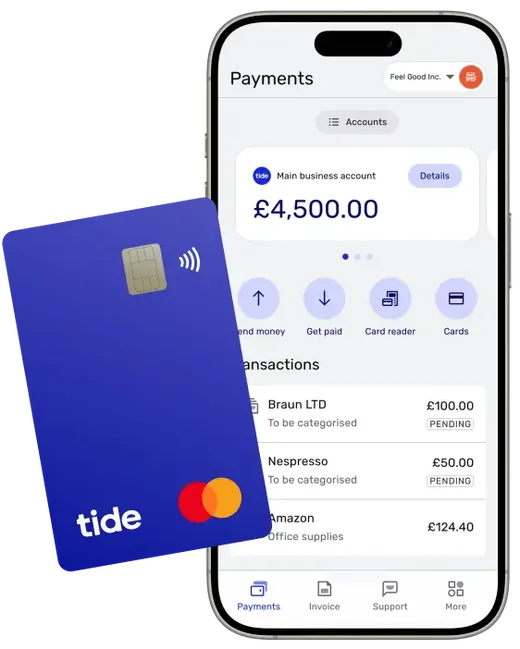
Tide: up to £200 cashback with STARTUP200*
Open a Tide business bank account with code STARTUP200. Get £75 when you spend £100 on your Tide card within 30 days, plus £125 if you pay £5,000 into a Tide Instant Saver within 7 days and keep it there for 30 days*.
New Tide members only. Paid 6–8 weeks after you qualify. We may earn commission from referrals.
Sign-up offers
A sign-up offer is a bonus, not a reason on its own to choose a business bank account. On the date we checked:
- Tide: up to £200 cashback with Tide promo code STARTUP200, subject to card spending and savings conditions*. *T&Cs apply
- Mettle: a £50 reward through its Refer a Business scheme, using a code from an existing Mettle customer, entered in the app after your first card payment.
- ANNA Money: merchant cashback of up to 40% on selected products and services, under ANNA's terms.
- Zempler Bank, Wise Business and Starling: no sign-up bonus found.
Always read the provider's terms: most rewards depend on spending, deposits or deadlines. Our guide to using a Tide referral code shows how these conditions work in practice.
How to open a business bank account
- 1
Check eligibility
Confirm the business bank account accepts your business type, turnover and time trading, and that you meet its residency and age rules.
- 2
Gather documents
Photo ID, proof of address and business details. Limited companies also need their Companies House registration number.
- 3
Apply in the app or online
Every account we compare is opened online or in an app. Enter any promo or referral code at this stage.
- 4
Verify your identity
Expect an ID check and, for many apps, a selfie. Providers don't usually guarantee an opening time, so allow a few days.
- 5
Start using it
Move income and costs to your new business bank account, connect your accounting software, and meet any sign-up offer deadlines.
How to switch
Small businesses can often move their business bank account using the Current Account Switch Service, which moves your payments across and closes the old account for you, usually in seven working days. Not every provider takes part, so check before you apply. If you're switching to claim a sign-up offer, read the terms carefully, as some offers are for brand-new customers only.
Need credit too?
A business bank account is for day-to-day money. If you also need a credit line, a business credit card is a separate product.
Featured partner · business credit card
Capital on Tap: 7,500 bonus points worth £75
Apply with code startupdeals (added automatically through our link). Bonus points are added after your first card transaction once you're approved. Approval and credit limit depend on Capital on Tap's checks. We may earn commission.
Before you apply: checklist
- the provider accepts your business type (sole trader, limited company, partnership) and turnover
- the monthly fee, and when any free period ends
- the cost of the payments you'll make each month
- how you'll pay in cash or cheques, and what it costs
- whether your money is FSCS-protected or safeguarded
- the tools you need: invoicing, accounting links, team cards
- any sign-up offer, and its conditions and deadlines
Glossary
- FSCS
- The Financial Services Compensation Scheme. It protects eligible deposits with UK banks up to £120,000 per depositor, per banking licence.
- Safeguarding
- How e-money institutions protect customers' money: keeping it separate from their own funds.
- E-money institution
- A firm authorised by the FCA to issue electronic money. It isn't a bank and can't pay interest on e-money.
- Price plan
- A provider's price list for a business bank account: the monthly fee plus charges for individual transactions.
- Faster Payments
- The UK system for near-instant bank transfers, used for most everyday business payments.
- CHAPS
- A same-day payment system used for large or time-critical payments, often charged separately.
- CASS
- The Current Account Switch Service, which moves payments to a new account and closes the old one.
How we keep this comparison up to date
We check each provider's pricing page and terms before we update this business bank account comparison, and the date at the top of the table shows when the figures were last checked. Spotted something out of date? Email hello@startupdeals.co.uk.
Frequently asked questions
What's the best business bank account?
It depends on your business. Compare the monthly fee, included payments, cash deposit costs and protection against how you'll use the business bank account. Our table shows all of these side by side.
Is there a free business bank account?
Six of the eight accounts we compare have a £0 monthly fee option: Tide, ANNA Money, Zempler, Mettle, Monzo Business and Starling. Other charges, such as extra transfers or cash deposits, may still apply.
Which business bank accounts are FSCS protected?
In our comparison: Tide (via ClearBank), Zempler Bank, Mettle (NatWest), Monzo Business and Starling hold money with a UK bank. ANNA's main account and Wise Business are e-money accounts.
Can I open a business bank account online?
Yes. All eight providers in our comparison take applications through an app or website, subject to their eligibility checks.
Can a sole trader open a business bank account?
Yes, with most providers of a business bank account. Use the "Sole trader" filter in the table to see which accept sole traders.
How long does it take to open a business bank account?
It varies with each provider's checks. Allow a few days, especially if you need the account for a deadline.
Do business bank accounts pay interest?
A business bank account often doesn't, but several providers offer a linked savings account, such as the Tide Instant Saver.
Can I have more than one business bank account?
Yes. Some businesses keep a second business bank account as a backup or to separate tax money.
How do you choose which accounts to include?
We include business bank accounts from partners and non-partners so the comparison is useful. Labels show which providers may pay us. How we compare.
Sources
All provider figures checked on 25 October 2026 from each provider's own pages: